 Ptah
Ptah
Ptah
Ptah compares the state you want with the state a database has, then produces a change you can inspect before it runs. Schema work can land as versioned SQL files or as a direct apply. Persistent model output uses a separate candidate, verification, cutover, and rollback lifecycle.
The default quick start creates and verifies a SQLite database in about five minutes. It needs no database server, Docker, or Go toolchain.
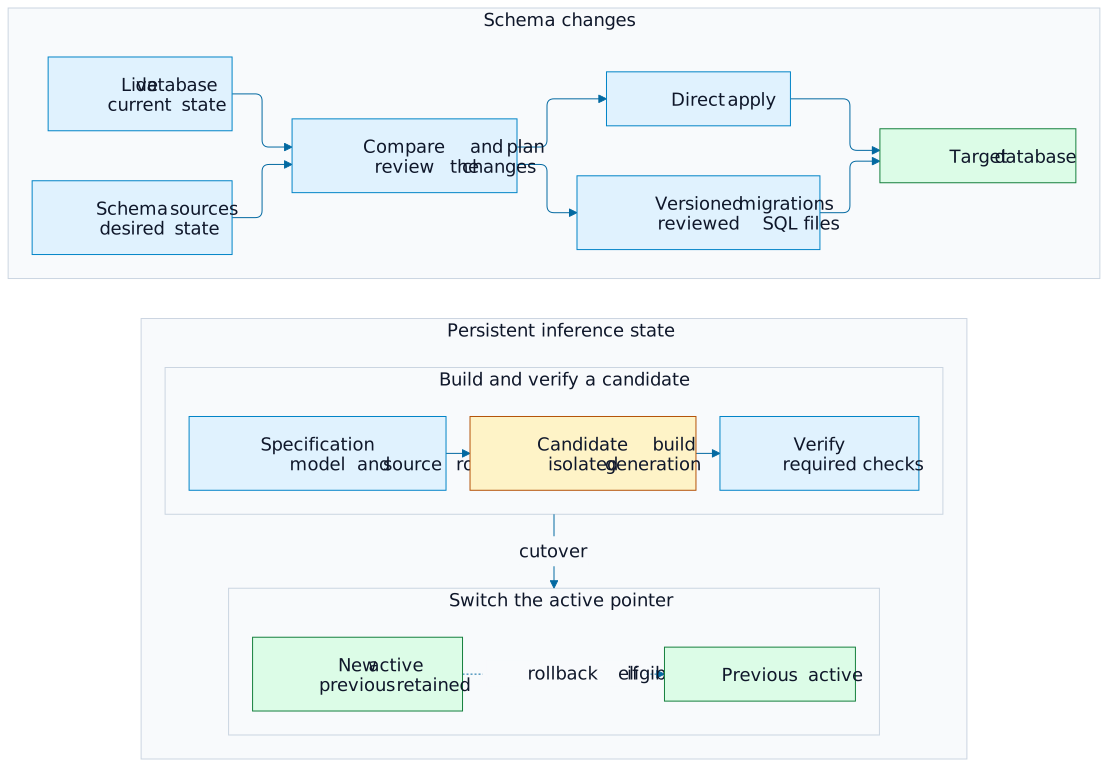
Schema changes and persistent inference state use separate review and cutover paths.
What to notice: Schema changes converge a desired schema and a database through versioned files or direct apply. Inference changes keep the active generation available until a candidate passes verification and cutover.
See what Ptah produces
Section titled “See what Ptah produces”These are generated from committed fixtures by the same commands the linked pages document—not mockups or conceptual diagrams.

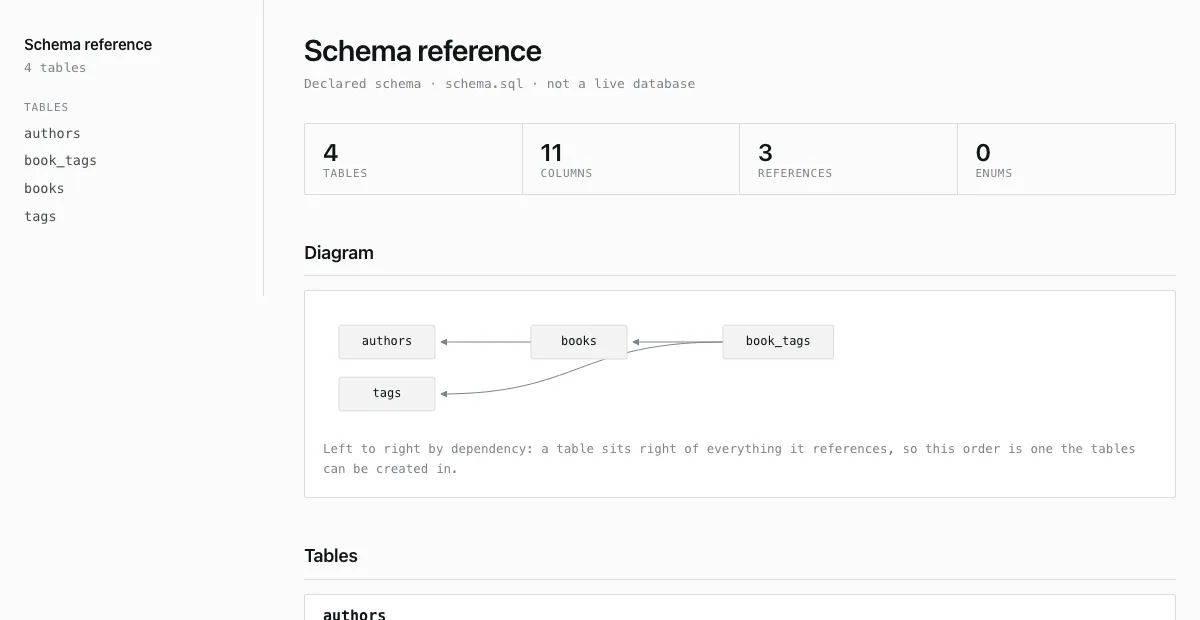
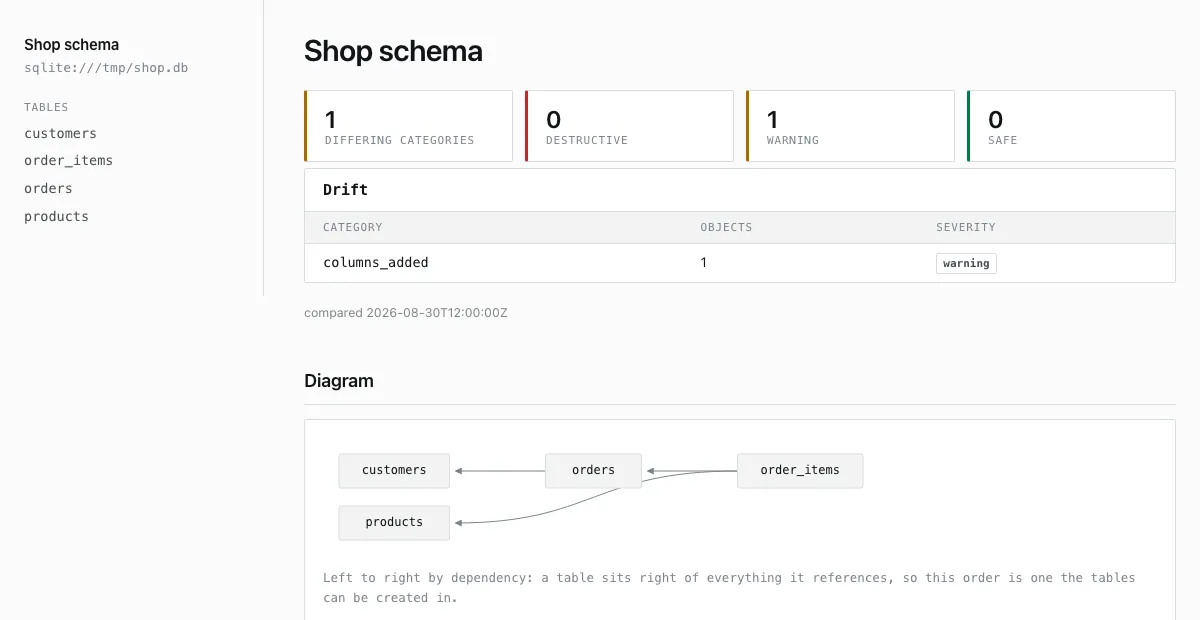
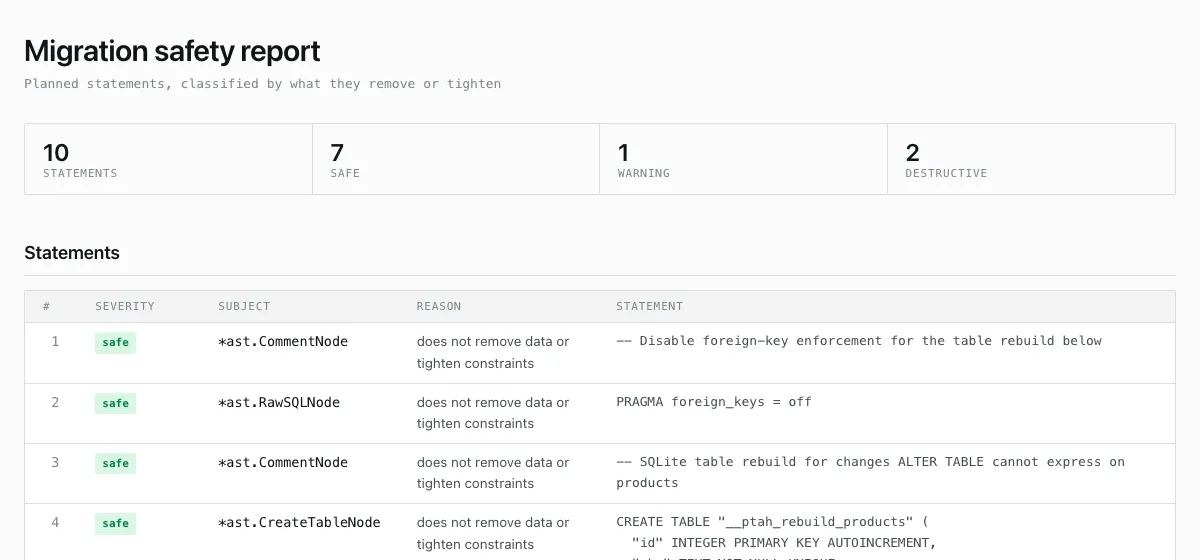
Start with your situation
Section titled “Start with your situation”Three product domains
Section titled “Three product domains”Versioned migrations
Section titled “Versioned migrations”Keep ordered SQL files in your repository when a change must be reviewed, replayed across environments, and represented in deployment history.
Start with a versioned migration or open the versioned workflow overview.
Direct schema changes
Section titled “Direct schema changes”Keep a desired schema and let Ptah plan the SQL that makes a target database match it. This path suits a database with one clear owner and changes that do not need a committed migration file.
Run the default quick start or open the direct workflow overview.
Inference migrations
Section titled “Inference migrations”Keep the active generation available while Ptah builds, catches up, and verifies a candidate generation. Cutover changes the active pointer only after the candidate passes the required checks.
Check whether inference migrations apply.
Common tasks
Section titled “Common tasks”Evidence and compatibility
Section titled “Evidence and compatibility”Support levels describe what this repository exercises, not what a server is allowed to do. The database support matrix is generated from the same release-line declaration used by CI.
Atlas compatibility is a separate journey through the ptah-compat binary.
The Atlas overview distinguishes default compatibility,
strict Community Edition mode, native Ptah, measured parity, and retained
divergences. The native ptah binary does not register Atlas command paths.
Ptah is an independent MIT-licensed implementation. The license boundary records the provenance policy.